
“…FOR THERE IS NOTHING GOOD OR BAD BUT THINKING MAKES IT SO. TO ME IT IS A PRISON.”
- HAMLET
Intuitive Eating: Supporting Health, Wellbeing, and a Positive Relationship with Food
Intuitive eating is an evidence-based, weight-inclusive approach to food and health developed by registered dietitians Evelyn Tribole and Elyse Resch in 1995. Instead of following restrictive diets or rigid food rules, intuitive eating encourages people to reconnect with their body’s natural signals of hunger, fullness, and satisfaction.
The goal is to rebuild trust in the body and move away from dieting behaviours. By shifting the focus away from weight and toward wellbeing, intuitive eating supports a more balanced, sustainable relationship with food.
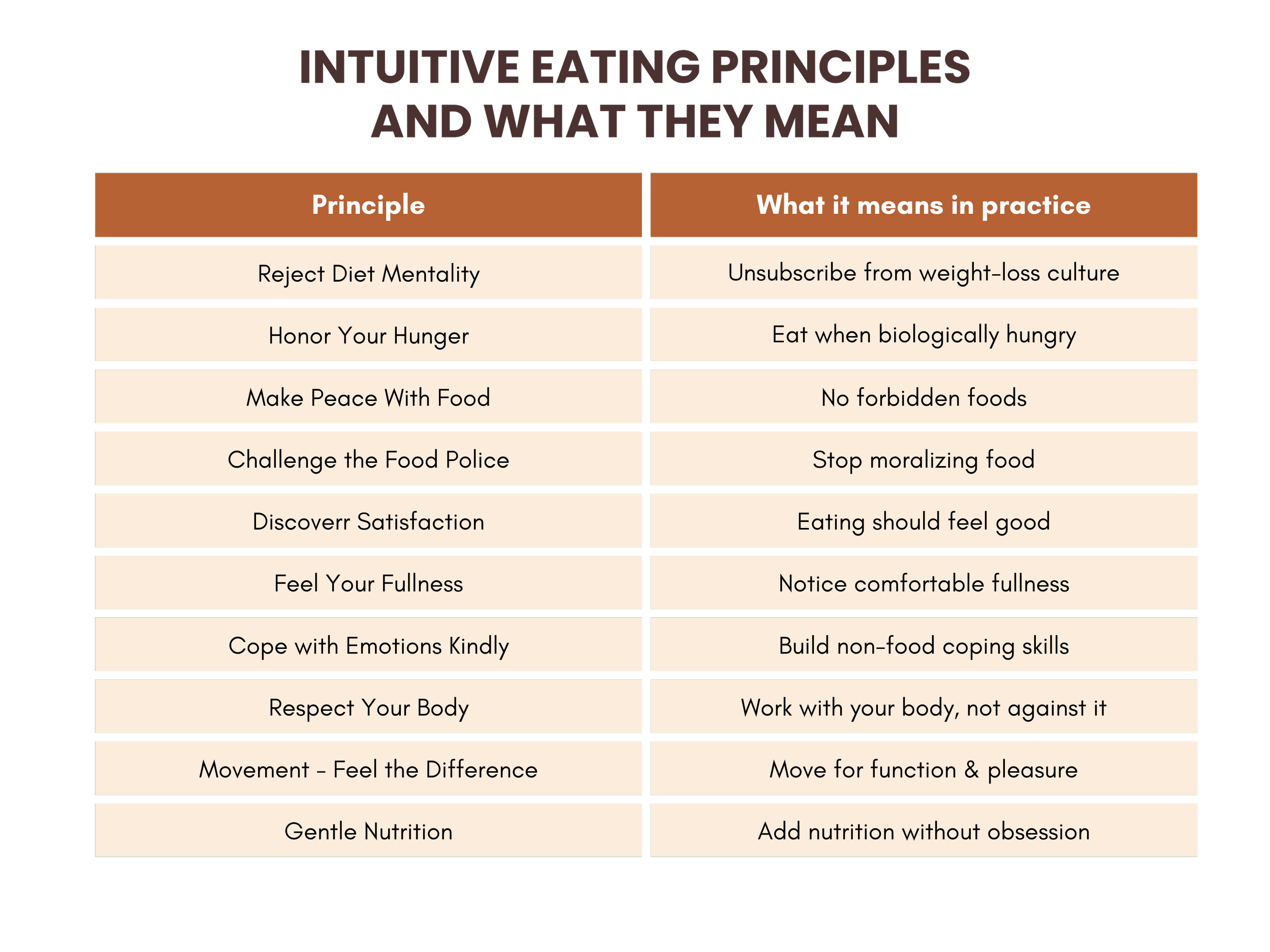
The framework is built around ten core principles, including rejecting diet culture, respecting the body, and practicing gentle nutrition. Together, these principles support both physical health and emotional wellbeing, while helping people develop a calmer, more compassionate relationship with eating.
What Research Says About Intuitive Eating
A growing body of research shows that intuitive eating is associated with positive physical health, mental health, and dietary outcomes.
People who practice intuitive eating tend to demonstrate healthier eating patterns, including more regular eating habits and higher diet quality, such as increased intake of fruit, vegetables, fibre, and a wider variety of foods. Intuitive eating has also been associated with better cardiovascular health indicators and less weight cycling (repeated cycles of dieting and weight regain).
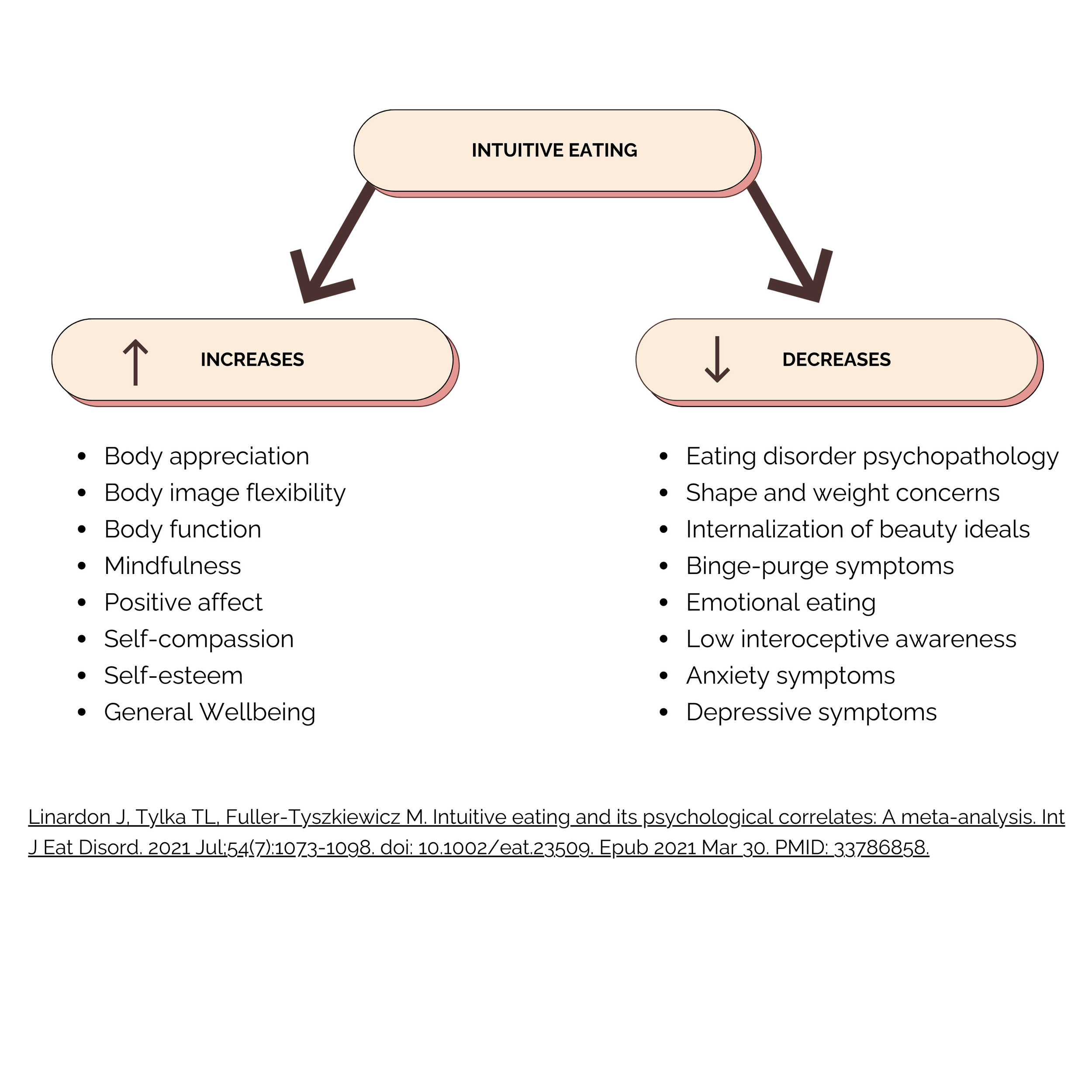
The strongest evidence relates to psychological wellbeing. A large meta-analysis by Linardon et al. (2021) found that intuitive eating is linked with: improved self-esteem, positive affect and overall wellbeing. At the same time, intuitive eating is associated with lower levels of disordered eating behaviours, preoccupation with weight or body shape, and lower levels of anxiety and depressive symptoms. See graphic below for further details on outcomes.
In other words, intuitive eating supports not just what we eat, but also how we feel about food and our bodies.
Intuitive Eating and Children
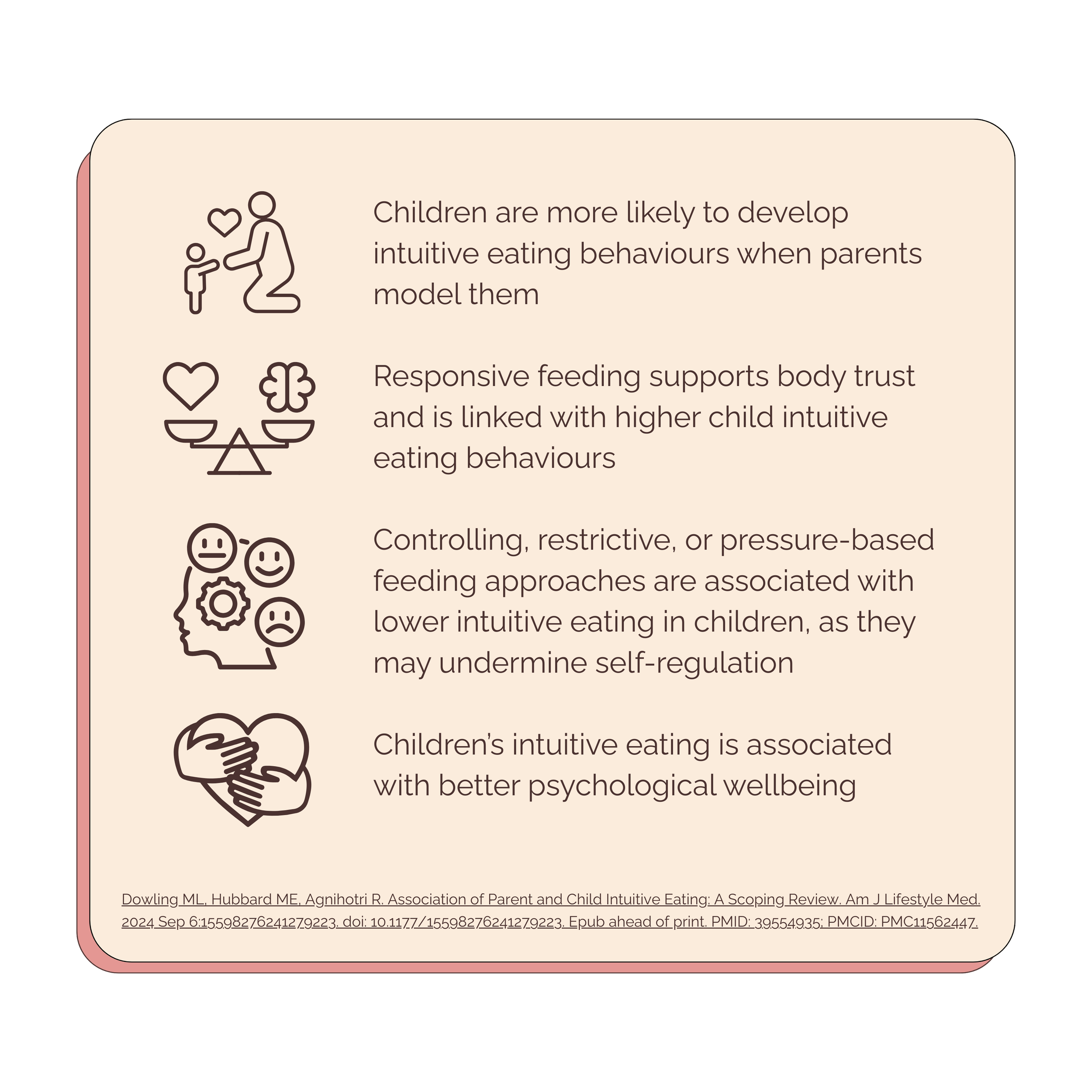
Research shows that parents play an important role in shaping children’s relationship with food.
Similarly, children are more likely to develop intuitive eating behaviours when parents model them. When caregivers support children in listening to their own hunger and fullness cues - often called responsive feeding - children are more likely to maintain the natural body awareness they are born with.
A 2024 scoping review by Dowling et al. examining parent and child intuitive eating behaviours found that responsive feeding practices are associated with higher intuitive eating in children and better psychological wellbeing.
In contrast, controlling or restrictive feeding approaches, such as pressuring children to eat or restricting foods, may undermine children’s ability to self-regulate their eating.
Creating a Calmer Relationship with Food
One of the goals of this approach is to reduce the stress and pressure that often surrounds food. By moving away from “good” and “bad” food labels, it encourages curiosity, flexibility, and balance.
For families, this can create a calmer feeding environment where children feel supported in learning about food and their bodies. Over time, this helps children build confidence with eating and trust in their own internal cues.
Supporting intuitive eating within families also means supporting parents’ own relationship with food, because the way adults talk about food, bodies, and dieting often shapes how children learn to think about eating. For further information on how I approach child feeding visit this page.
Why This Approach can help
Intuitive eating is not about ignoring nutrition. Instead, it brings together body awareness, gentle nutrition, and emotional wellbeing to support health in a sustainable way.
For many families, this approach helps move away from food battles and toward a more calm relationship with food.
If you have any further questions on the Intuitive Eating approach, please see the FAQ section below, or email your questions to sara@nourishedwithintuition.co.uk.
FAQ
-
No. Intuitive Eating is an approach that specifically moves away from dieting. It does not involve meal plans, calorie counting, or food restrictions. Instead, it focuses on supporting long-term wellbeing by helping individuals listen to and trust their body’s internal cues.
Research suggests that people who eat more intuitively (as measured with Tylka’s Intuitive Eating scale) tend to experience greater weight stability over time and show favourable health indicators, including markers related to cardiovascular health. Rather than a weight-centric approach to health, intuitive eating supports sustainable behaviours that benefit both physical and mental health.
-
Weight changes vary from person to person. Some people gain weight, some lose weight, and others stay the same when they eat more intuitively. Intuitive eating prioritises health, satisfaction, peace with food, and body trust - not weight control.
Research shows that people who eat more intuitively tend to experience greater weight stability over time compared with those who rely on rigid food control, and they are less likely to engage in unhealthy weight control behaviours such as binge eating. Higher intuitive eating scores have also been linked with greater body satisfaction and lower levels of disordered eating behaviours in community studies.
-
Yes. Many people find intuitive eating helpful for reducing binge eating and emotional eating over time. By removing restriction and addressing emotional and physical needs, food often holds less power over us. Interestingly, in some instances our preferences can change and what we considered satisfying in the past no longer retains the same value. Higher intuitive eating scores have been linked with greater body satisfaction and lower levels of disordered eating behaviours in community studies.
-
Nutrition and movement are part of intuitive eating, but without rigid rules or weight-focused goals. Food choices are guided by nourishment, satisfaction, and how foods make you feel, rather than rigid nutrient counting or control. Movement is approached as a way to support energy, strength, and overall wellbeing, focusing on enjoyment and sustainability rather than calorie burning.
-
Mindful eating focuses on how you eat bringing awareness to the eating experience, such as taste, hunger, fullness, and emotions in the moment. It is a valuable skill that helps increase presence and reduce autopilot eating.
Intuitive eating is an eating framework which in some ways aligns with mindful eating, however when taking a closer look is quite different to mindful eating.
Intuitive Eating addresses the wider relationship with food and body by exploring food rules, our relationship with diet culture, body image, and trust in internal cues. Intuitive eating is a framework which support a sustainable long-term change, not just a practice used at mealtimes.
Intuitive eating also aligns closely with Health At Every Size® (HAES®). Both approaches prioritise health-promoting behaviours, body respect, and wellbeing without focusing on weight as a measure of health. Together, they support sustainable habits, improved mental health, and compassionate care that recognises health can exist across a range of body sizes.
-
Intuitive eating can be adapted to support various health conditions. It focuses on gentle nutrition and collaboration with your body rather than restriction, and individual support is often helpful in these cases. However, I only work with individuals who have eating disorders or complex health conditions as part of a wider care team, alongside appropriate dietetic, medical, and mental health support. If I believe your needs fall outside my scope of practice, I will be clear about this after the initial screening process and recommend seeking support from an appropriate professional to help ensure you receive the care that is right for you.
-
For babies and toddlers, intuitive eating means encouraging and responding to their natural hunger and fullness cues rather than feeding by strict rules. In practice, rather than applying intuitive eating principles per se, I draw from age-appropriate and intuitive eating-aligned approaches and frameworks, such as responsive feeding, baby-led weaning, Ellyn Satter’s Division of Responsibility and others, all of which promote structure without control. Research shows that infants and young children are capable of adjusting their intake based on internal signals of hunger and satiety, and that sensitive caregiver responses to these cues promote the development of self-regulation around eating.
-
Yes, intuitive eating is safe and appropriate for children. In fact, its principles are naturally present from infancy. Babies are born with the ability to recognise hunger and fullness, and intuitive eating supports protecting and nurturing this ability as children grow. From the introduction of solids onward, intuitive eating can be practised in age-appropriate ways, with caregivers providing structure, balance, and gentle guidance rather than control or restriction. I provide 1:1 Intuitive Eating counselling to ages 13 and older. Parents may participate in the sessions, if they so wish.
-
You can see all information regarding the services we offer and service fees here.
-
If you are deciding whether intuitive eating is right for you, below are some areas I can support you with:
A complicated or strained relationship with food and/or your body
A history of repetitive dieting and weight cycling
Frequent preoccupation with food and weight that interferes with daily life
Trying multiple approaches that haven’t felt sustainable and wanting greater peace with eating and your body
Finding social eating situations challenging, such as feeling pressure to order the “healthiest” option or stay within a specific calorie limit
Holding rigid or distorted beliefs about food, eating, or body image
If you’re uncertain whether this is the right way for you, feel free to book a free discovery call or email hello@nourishedwithintuition.com